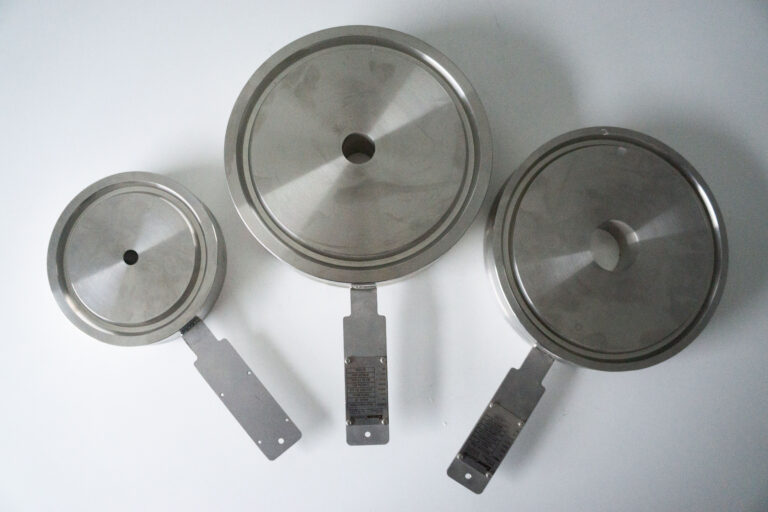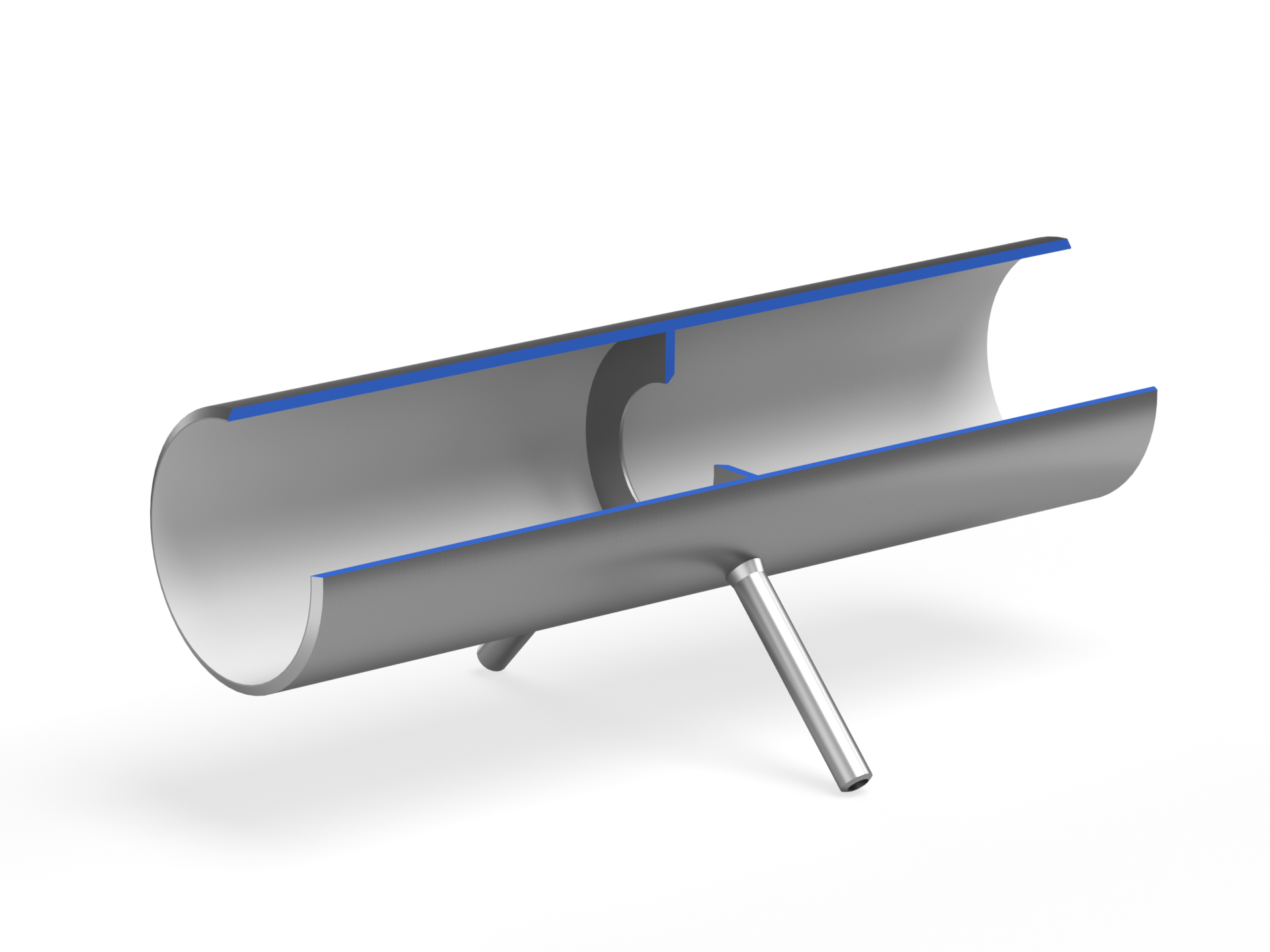
The EMCO Orifice Plate is used as a primary element in flow measurement of liquid, gas and steam applications based on the differential pressure principle. According to this working principle, the orifice plate creates a flow restriction in the pipeline to allow measurement of the resulting pressure drop and flow rate. Our orifice plates have been tested and tried for over 50 years and measure up to the highest industry and compliance standards.
The Orifice Plate Series MES is constructed with a single pressure tapping in all welded construction
|
|
|
|
Design and calculation standards
|
ISO 5167-2, ASME MFC-3M, DIN 19215, Shell Flow Meter Engineering Handbook, AGA no. 3
|
|
Sizes
|
2" - 40", DN 50 - 1000
|
|
Plate thickness
|
10 mm
|
|
Vent or drain hole
|
On request
|
|
Material
|
Carbon steel P235GH, AISI 316, 16Mo3, 13CrMo4-5, 10CrMo9-10, WB 36, X20CrMoV121, other materials on request
|
|
Mounting style
|
Weld ends according to DIN 2559 or ANSI B16.25
|
|
Pressure taps
|
Ø 21.3 mm, 24 mm, 26.9 mm, ½" BSP male, ½" NPT male
|
|
Tap length
|
150 mm, others on request.
|
|
Tap location
|
Tap location for steam flow: 180°. At least 45° apart for liquid and gas. To be stated with order
|
|
Orifice plate shapes
|
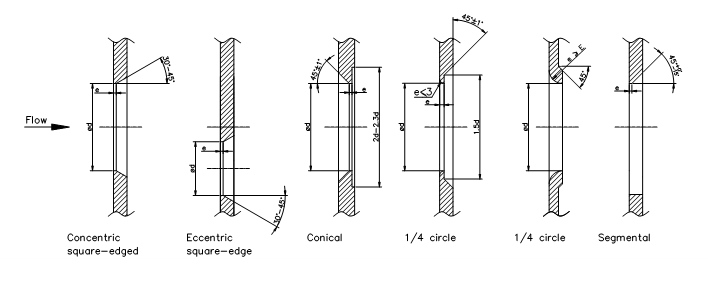
Square edge concentric, square edge eccentric, conical, 1/4 circle, segment. The plate is bevelled on the down stream side except for 1/4 circle orifice plate
|
|
Marking
|
The orifice plate is marked with "+" and"-" and flow direction.
|
|
|
|
|
Accuracy
|
+/- 0,5 % for β < 0,6 and equal to β for β values above 0,6
|
|
Pressure loss
|
Depending on β, for β equal to 0,6 : ca. 60 % of the differential pressure measured
|
|
Limits for Reynolds No
|
Re > 1260 x β2 D according to ISO 5167 2000 < Re < 108 according to ASME MFC-3M
|
|
|
|
|
Single and double shut-off valves and condensing chambers for steam flow measurement
|
DN |
Ø Inner pipe |
Upstream length ISO 5167 |
Total length ISO 5167 |
Upstream length DIN 19215 |
Total length DIN 19215 |
|---|---|---|---|---|---|
|
50
|
45 - 57
|
115
|
230
|
150
|
250
|
|
65
|
58 - 72
|
145
|
290
|
180
|
300
|
|
80
|
73 -. 90
|
180
|
360
|
230
|
350
|
|
100
|
91 - 112
|
225
|
450
|
280
|
400
|
|
125
|
113 - 137
|
275
|
550
|
350
|
500
|
|
150
|
138 - 162
|
325
|
650
|
400
|
600
|
|
(175)
|
163 - 187
|
375
|
750
|
470
|
700
|
|
200
|
188 - 225
|
450
|
900
|
570
|
800
|
|
250
|
226 - 275
|
550
|
1100
|
690
|
1000
|
|
300
|
276 - 325
|
650
|
1300
|
820
|
1200
|
|
350
|
326 - 375
|
750
|
1500
|
950
|
1400
|
|
400
|
376 - 425
|
850
|
1700
|
1050
|
1500
|
|
450
|
426 - 475
|
950
|
1900
|
1200
|
1700
|
|
500
|
476 - 550
|
1100
|
2200
|
1370
|
2000
|
|
600
|
551 - 650
|
1300
|
2600
|
1500
|
2000
|
|
700
|
651 -750
|
1500
|
3000
|
1500
|
2000
|
|
800
|
751 - 850
|
1700
|
3400
|
1500
|
2000
|
|
900
|
851 - 950
|
1900
|
3800
|
1500
|
2000
|
|
1000
|
951 - 1100
|
2200
|
4400
|
1500
|
2000
|
Before installation, the orifice plate must be kept clean and protected against corrosion and physical damage. It is also important that you pay careful attention to to the sharp edge of the plate. Once ensured that it is clean, install the orifice plate carefully such that the orifice bore aligns with the centre of the pipeline. Tap location varies depending on whether it is used for liquid, gas or steam. It is not supplied with any safety devices and must not be used for higher pressure, than stated on the name plate. The pipe system must therefore be equipped with a safety device. However, this type of primary element requires no special maintenance.
Download the installation guide above for more detailed information.
| Cookie | Duration | Description |
|---|---|---|
| cookielawinfo-checkbox-advertisement | 1 year | Set by the GDPR Cookie Consent plugin, this cookie is used to record the user consent for the cookies in the "Advertisement" category . |
| cookielawinfo-checkbox-analytics | 11 months | This cookie is set by GDPR Cookie Consent plugin. The cookie is used to store the user consent for the cookies in the category "Analytics". |
| cookielawinfo-checkbox-functional | 11 months | The cookie is set by GDPR cookie consent to record the user consent for the cookies in the category "Functional". |
| cookielawinfo-checkbox-necessary | 11 months | This cookie is set by GDPR Cookie Consent plugin. The cookies is used to store the user consent for the cookies in the category "Necessary". |
| cookielawinfo-checkbox-others | 11 months | This cookie is set by GDPR Cookie Consent plugin. The cookie is used to store the user consent for the cookies in the category "Other. |
| cookielawinfo-checkbox-performance | 11 months | This cookie is set by GDPR Cookie Consent plugin. The cookie is used to store the user consent for the cookies in the category "Performance". |
| elementor | never | This cookie is used by the website's WordPress theme. It allows the website owner to implement or change the website's content in real-time. |
| viewed_cookie_policy | 11 months | The cookie is set by the GDPR Cookie Consent plugin and is used to store whether or not user has consented to the use of cookies. It does not store any personal data. |
| Cookie | Duration | Description |
|---|---|---|
| _ga | 2 years | The _ga cookie, installed by Google Analytics, calculates visitor, session and campaign data and also keeps track of site usage for the site's analytics report. The cookie stores information anonymously and assigns a randomly generated number to recognize unique visitors. |
| _ga_* | 1 year 1 month 4 days | Google Analytics sets this cookie to store and count page views. |
| _gat_UA-* | 1 minute | Google Analytics sets this cookie for user behaviour tracking. |
| _gat_UA-151202324-1 | 1 minute | A variation of the _gat cookie set by Google Analytics and Google Tag Manager to allow website owners to track visitor behaviour and measure site performance. The pattern element in the name contains the unique identity number of the account or website it relates to. |
| _gid | 1 day | Installed by Google Analytics, _gid cookie stores information on how visitors use a website, while also creating an analytics report of the website's performance. Some of the data that are collected include the number of visitors, their source, and the pages they visit anonymously. |
| CONSENT | 2 years | YouTube sets this cookie via embedded YouTube videos and registers anonymous statistical data. |
| VISITOR_INFO1_LIVE | 5 months 27 days | YouTube sets this cookie to measure bandwidth, determining whether the user gets the new or old player interface. |
| YSC | session | Youtube sets this cookie to track the views of embedded videos on Youtube pages. |
| yt-remote-connected-devices | never | YouTube sets this cookie to store the user's video preferences using embedded YouTube videos. |
| yt-remote-device-id | never | YouTube sets this cookie to store the user's video preferences using embedded YouTube videos. |
| yt.innertube::nextId | never | YouTube sets this cookie to register a unique ID to store data on what videos from YouTube the user has seen. |
| yt.innertube::requests | never | YouTube sets this cookie to register a unique ID to store data on what videos from YouTube the user has seen. |