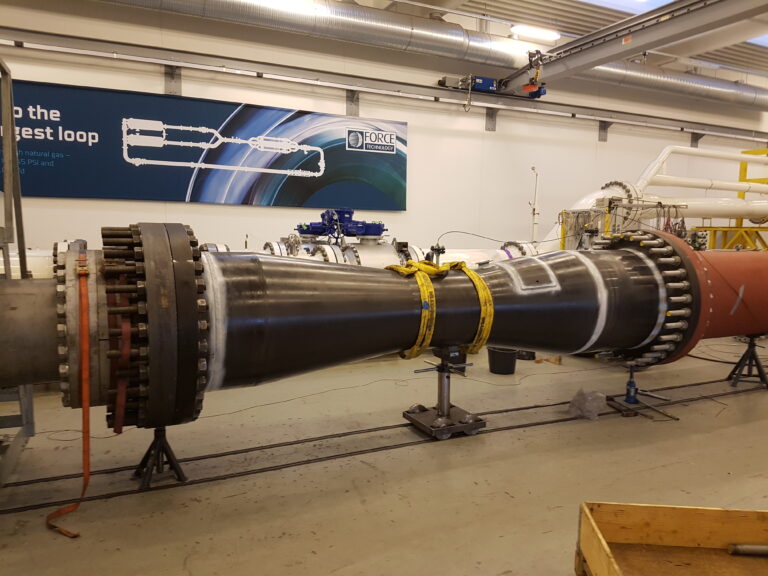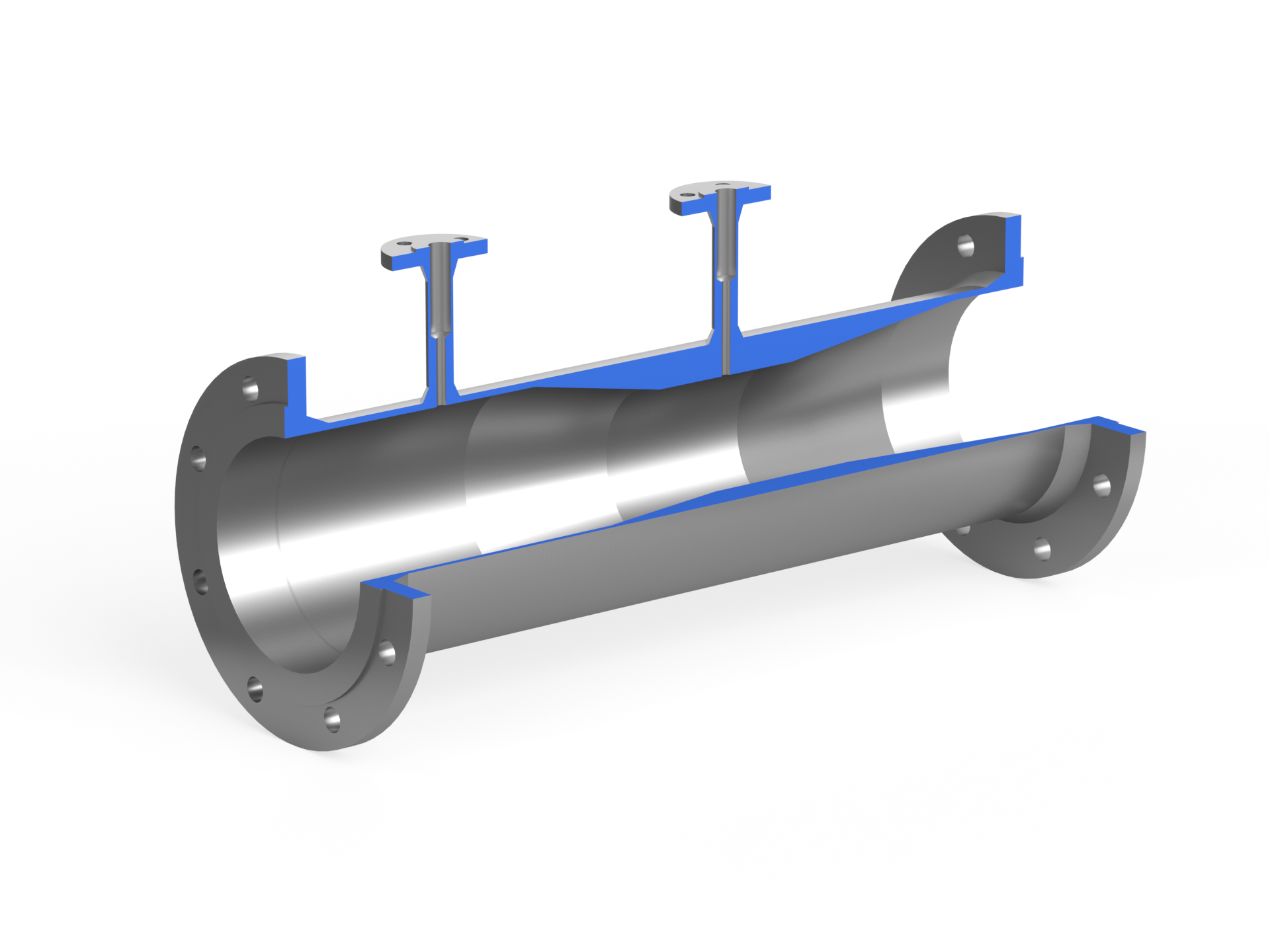
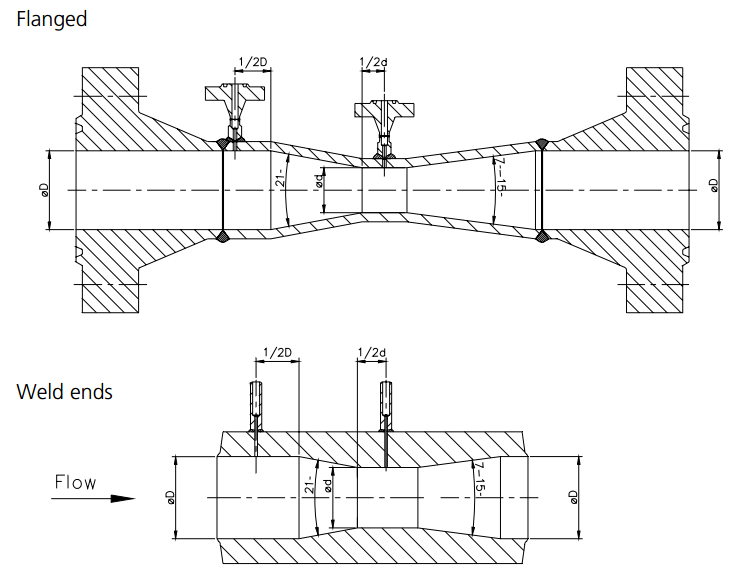
The classical venturi tube is one of the most tested and trusted flow meters on the market. Based on the ISO 5167-4 standard, it offers durable flow measurement with minimal pressure loss.
|
|
|
|
Design and calculation standards
|
ISO 5167-4, ASME MFC-3M
|
|
Sizes
|
DN 50 - DN 250, 2” - 10"
|
|
Pressure rating
|
PN 10 - 640, 150 - 2500 lbs, ISO PN 20 - 420
|
|
β (d/D)
|
Preferred range 0,4 < β < 0,75
|
|
Material
|
Carbon steel, AISI 316, Duplex, 254 SMO, other on request
|
|
Mounting style
|
Weld ends according to DN 2559 or ANSI B16.25. Flanges acc. to DIN or ANSI B16.5 standards (Greyloc Clamp connection available on request)
|
|
Pressure taps
|
Weld ends Ø 21.3 mm, 26.9 mm, thread connection 3/8", 1/2" BSP, 1/2" NPT, or flanged
|
|
Tappings
|
Single pressure tappings or 2x4 tappings each arranged with an external annular ring to equalize the pressure
|
|
Outlet cone
|
7-15°
|
|
|
|
|
Accuracy
|
1 % (acc. to ISO 5167)
|
|
Pressure loss
|
Depending on outlet cone, between 10-15% of the differential pressure measured
|
|
Limits for Reynolds No
|
2*10^5 < ReD < 2*10^6 according to ASME
|
|
|
|
|
Shut-off valves
|
|
|
Condensing chamber unit for steam flow
|
The machined venturi tube must be installed in a straight cylindrical pipe without obstructions, with specific inner pipe diameter requirements. The required straight lengths vary based on beta values and the presence of bends or reducers. Full bore valves are recommended upstream, and the inner pipe wall must be clean and smooth. The Venturi tube should be centered carefully and connected to the differential pressure transmitter below it for most applications, except for gas flow. Safety devices must be in place to prevent pressure exceedance, and elevated temperatures should be avoided. Regular maintenance involves ensuring a deposit-free interior. Compliance with ISO 5167 and other standards is crucial for quality assurance.
Download the installation guide above for more detailed information.
| Cookie | Duration | Description |
|---|---|---|
| cookielawinfo-checkbox-advertisement | 1 year | Set by the GDPR Cookie Consent plugin, this cookie is used to record the user consent for the cookies in the "Advertisement" category . |
| cookielawinfo-checkbox-analytics | 11 months | This cookie is set by GDPR Cookie Consent plugin. The cookie is used to store the user consent for the cookies in the category "Analytics". |
| cookielawinfo-checkbox-functional | 11 months | The cookie is set by GDPR cookie consent to record the user consent for the cookies in the category "Functional". |
| cookielawinfo-checkbox-necessary | 11 months | This cookie is set by GDPR Cookie Consent plugin. The cookies is used to store the user consent for the cookies in the category "Necessary". |
| cookielawinfo-checkbox-others | 11 months | This cookie is set by GDPR Cookie Consent plugin. The cookie is used to store the user consent for the cookies in the category "Other. |
| cookielawinfo-checkbox-performance | 11 months | This cookie is set by GDPR Cookie Consent plugin. The cookie is used to store the user consent for the cookies in the category "Performance". |
| elementor | never | This cookie is used by the website's WordPress theme. It allows the website owner to implement or change the website's content in real-time. |
| viewed_cookie_policy | 11 months | The cookie is set by the GDPR Cookie Consent plugin and is used to store whether or not user has consented to the use of cookies. It does not store any personal data. |
| Cookie | Duration | Description |
|---|---|---|
| _ga | 2 years | The _ga cookie, installed by Google Analytics, calculates visitor, session and campaign data and also keeps track of site usage for the site's analytics report. The cookie stores information anonymously and assigns a randomly generated number to recognize unique visitors. |
| _ga_* | 1 year 1 month 4 days | Google Analytics sets this cookie to store and count page views. |
| _gat_UA-* | 1 minute | Google Analytics sets this cookie for user behaviour tracking. |
| _gat_UA-151202324-1 | 1 minute | A variation of the _gat cookie set by Google Analytics and Google Tag Manager to allow website owners to track visitor behaviour and measure site performance. The pattern element in the name contains the unique identity number of the account or website it relates to. |
| _gid | 1 day | Installed by Google Analytics, _gid cookie stores information on how visitors use a website, while also creating an analytics report of the website's performance. Some of the data that are collected include the number of visitors, their source, and the pages they visit anonymously. |
| CONSENT | 2 years | YouTube sets this cookie via embedded YouTube videos and registers anonymous statistical data. |
| VISITOR_INFO1_LIVE | 5 months 27 days | YouTube sets this cookie to measure bandwidth, determining whether the user gets the new or old player interface. |
| YSC | session | Youtube sets this cookie to track the views of embedded videos on Youtube pages. |
| yt-remote-connected-devices | never | YouTube sets this cookie to store the user's video preferences using embedded YouTube videos. |
| yt-remote-device-id | never | YouTube sets this cookie to store the user's video preferences using embedded YouTube videos. |
| yt.innertube::nextId | never | YouTube sets this cookie to register a unique ID to store data on what videos from YouTube the user has seen. |
| yt.innertube::requests | never | YouTube sets this cookie to register a unique ID to store data on what videos from YouTube the user has seen. |